Показват се публикациите с етикет NASA. Показване на всички публикации

неделя, 3 февруари 2019 г.

Astronomy picture of the day by NASA - An Airglow Fan from Lake to Sky


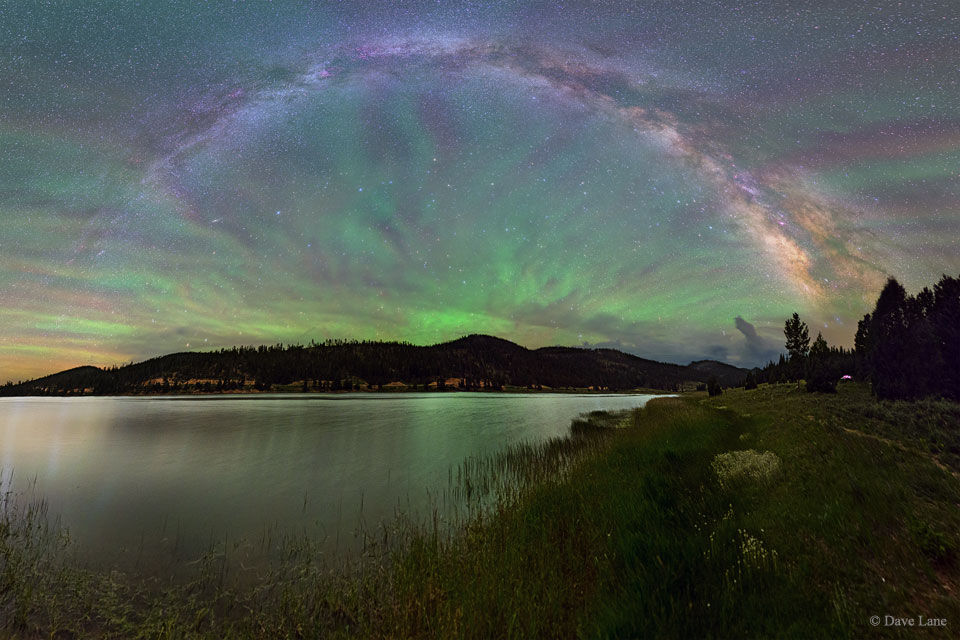
Why would the sky look like a giant fan? Airglow. The featured intermittent green glow appeared to rise from a lake through the arch of our Milky Way Galaxy, as captured during 2015 next to Bryce Canyon in Utah, USA. The unusual pattern was created by atmospheric gravity waves, ripples of alternating air pressure that can grow with height as the air thins, in this case about 90 kilometers up. Unlike auroras powered by collisions with energetic charged particles and seen at high latitudes, airglow is due to chemiluminescence, the production of light in a chemical reaction. More typically seen near the horizon, airglow keeps the night sky from ever being completely dark. via NASA

Снимка на деня за February 03, 2019 от NASA

See more

петък, 1 февруари 2019 г.

NASA Image of the day on February 01, 2019 - Sunrise From Columbia


Описание: On Jan. 22, 2003, the crew of Space Shuttle Columbia captured this sunrise from the crew cabin during Flight Day 7. via NASA

Снимка на деня от NASA за February 01, 2019

See more

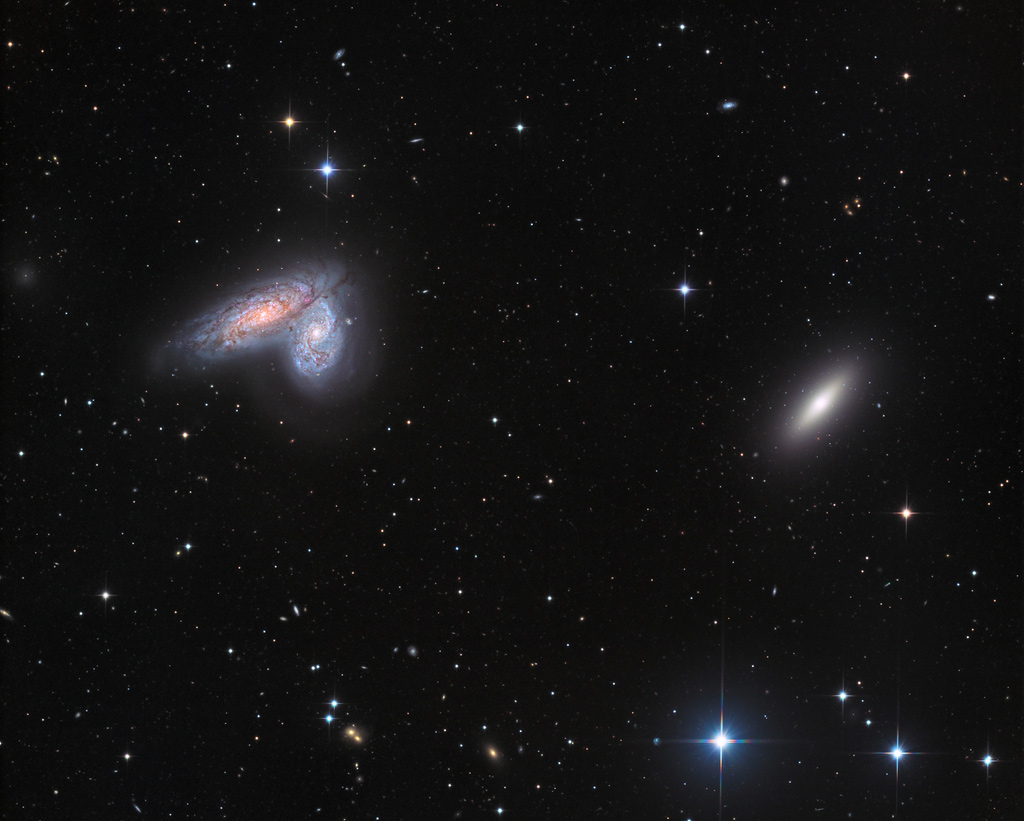
Astronomy picture of the day by NASA - Twin Galaxies in Virgo


Spiral galaxy pair NGC 4567 and NGC 4568 share this sharp cosmic vista with lonely elliptical galaxy NGC 4564. All are members of the large Virgo Galaxy Cluster. With their classic spiral arms, dust lanes, and star clusters, the eye-catching spiral pair is also known as the Butterfly Galaxies or the Siamese Twins. Very close together, the galaxy twins don't seem to be too distorted by gravitational tides. Their giant molecular clouds are known to be colliding though and are likely fueling the formation of massive star clusters. The galaxy twins are about 52 million light-years distant, while their bright cores appear separated by about 20,000 light-years. Of course, the spiky foreground stars lie within our own Milky Way. via NASA

Снимка на деня за February 01, 2019 от NASA

See more
четвъртък, 31 януари 2019 г.

NASA Image of the day on January 31, 2019 - Hubble Accidentally Discovers a New Galaxy


Описание: Despite the vastness of space, objects tend to get in front of each other. via NASA

Снимка на деня от NASA за January 31, 2019

See more

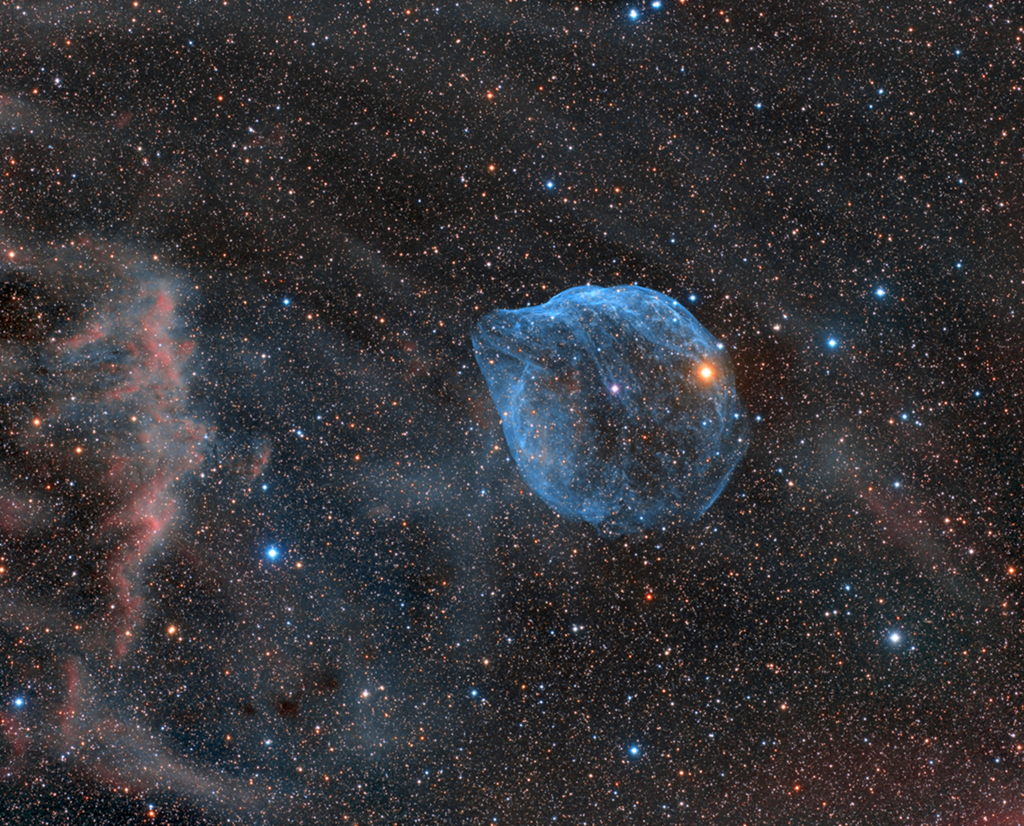
Astronomy picture of the day by NASA - Sharpless 308: Star Bubble


Blown by fast winds from a hot, massive star, this cosmic bubble is huge. Cataloged as Sharpless 2-308 it lies some 5,200 light-years away toward the constellation of the Big Dog (Canis Major) and covers slightly more of the sky than a Full Moon. That corresponds to a diameter of 60 light-years at its estimated distance. The massive star that created the bubble, a Wolf-Rayet star, is the bright one near the center of the nebula. Wolf-Rayet stars have over 20 times the mass of the Sun and are thought to be in a brief, pre-supernova phase of massive star evolution. Fast winds from this Wolf-Rayet star create the bubble-shaped nebula as they sweep up slower moving material from an earlier phase of evolution. The windblown nebula has an age of about 70,000 years. Relatively faint emission captured in the expansive image is dominated by the glow of ionized oxygen atoms mapped to a blue hue. SH2-308 is also known as The Dolphin Nebula. via NASA

Снимка на деня за January 31, 2019 от NASA

See more
сряда, 30 януари 2019 г.

NASA Image of the day on January 30, 2019 - Sailing Over the Caribbean From the International Space Station


Описание: Portions of Cuba, the Bahamas and the Turks and Caicos Islands are viewed from the International Space Station. via NASA

Снимка на деня от NASA за January 30, 2019

See more

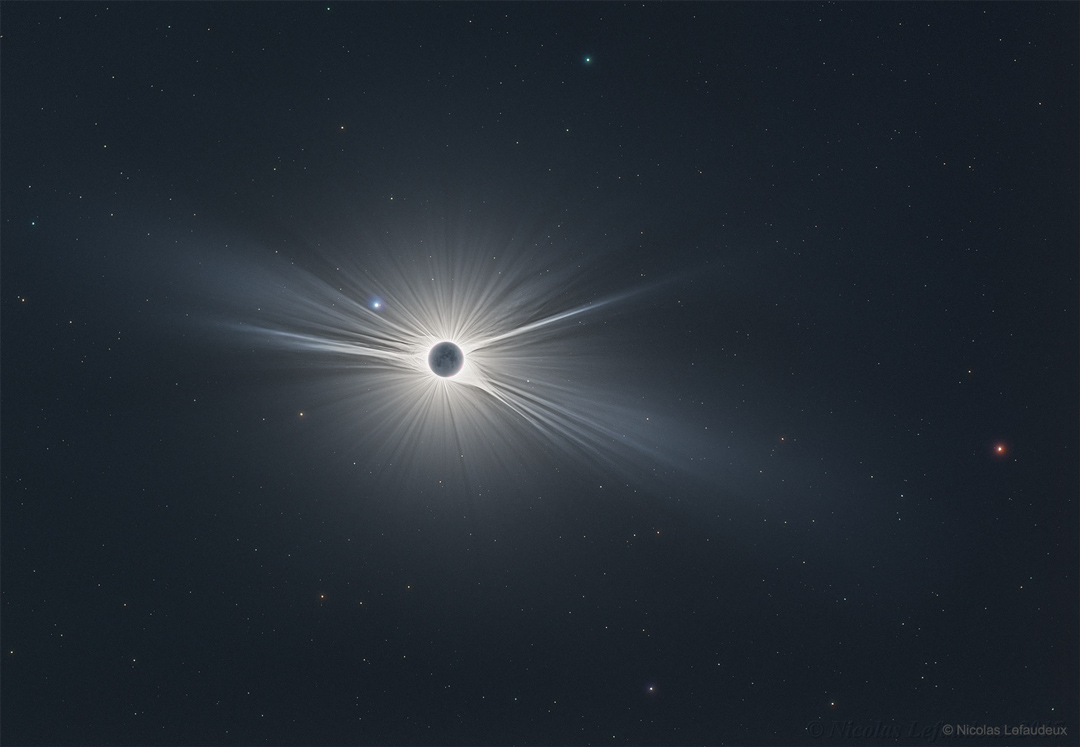
Astronomy picture of the day by NASA - Wide Field View of Great American Eclipse


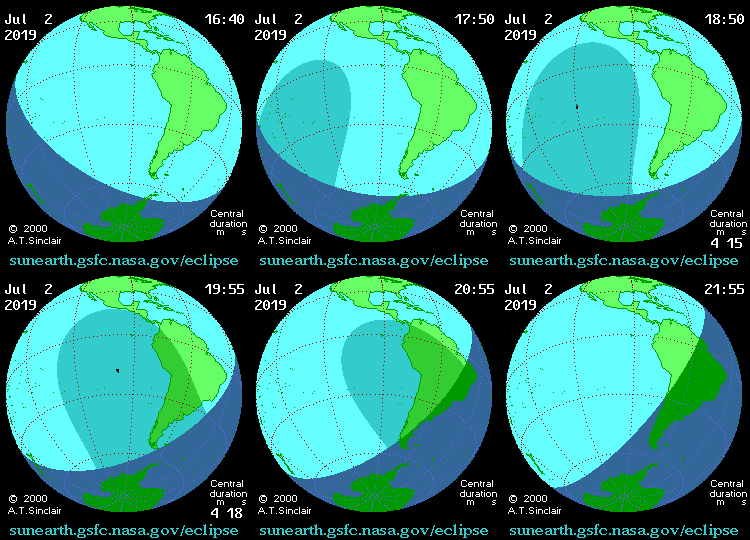
Only in the fleeting darkness of a total solar eclipse is the light of the solar corona easily visible. Normally overwhelmed by the bright solar disk, the expansive corona, the sun's outer atmosphere, is an alluring sight. But the subtle details and extreme ranges in the corona's brightness, although discernible to the eye, are notoriously difficult to photograph. Pictured here, however, using over 120 images and meticulous digital processing, is a detailed wide-angle image of the Sun's corona taken during the Great American Eclipse in 2017 August. Clearly visible are intricate layers and glowing caustics of an ever changing mixture of hot gas and magnetic fields. Hundreds of stars as faint as 11th magnitude are visible behind the Moon and Sun, with Mars appearing in red on the far right. The next total eclipse of the Sun will occur on July 2 and be visible during sunset from a thin swath across Chile and Argentina. via NASA

Снимка на деня за January 30, 2019 от NASA

See more
вторник, 29 януари 2019 г.

NASA Image of the day on January 29, 2019 - Falcon 9, Crew Dragon Roll to Launch Pad


Описание: Falcon 9, Crew Dragon Roll to Launch Pad via NASA

Снимка на деня от NASA за January 29, 2019

See more

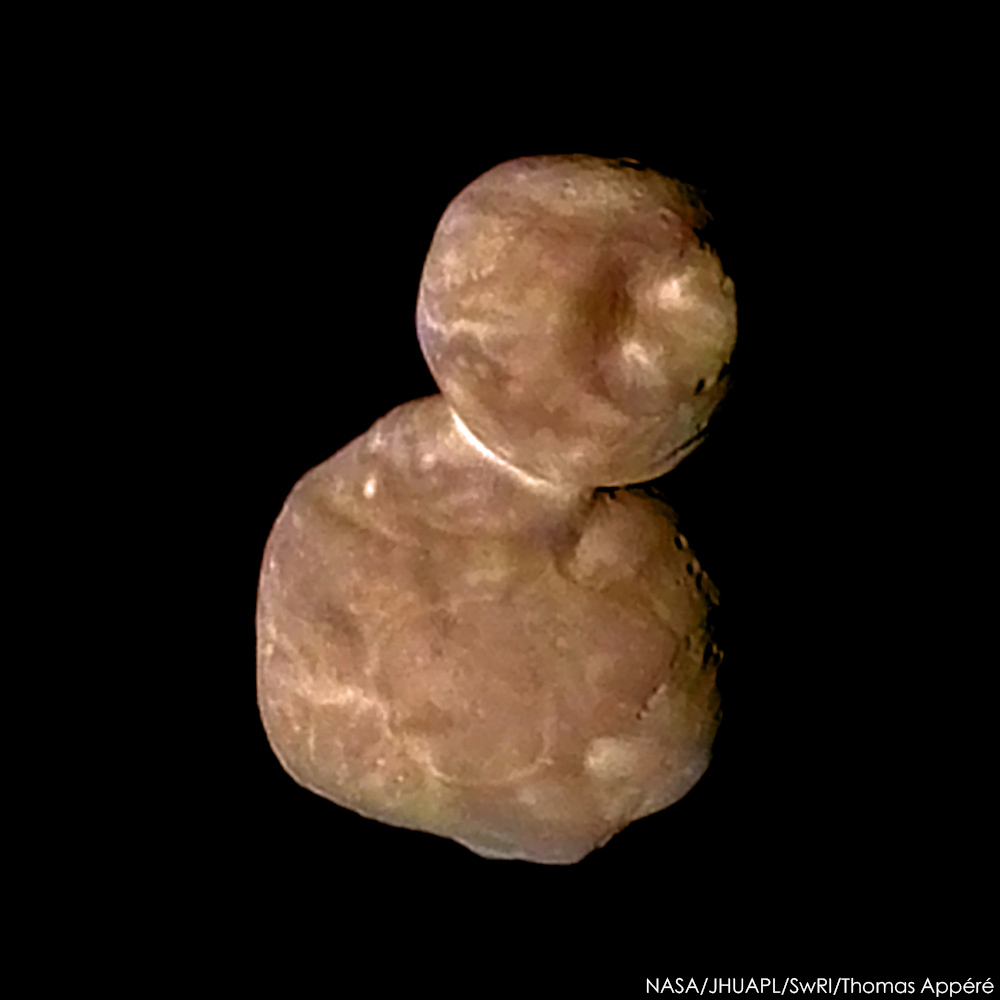
Astronomy picture of the day by NASA - Ultima Thule from New Horizons


How do distant asteroids differ from those near the Sun? To help find out, NASA sent the robotic New Horizons spacecraft past the classical Kuiper belt object 2014 MU69, nicknamed Ultima Thule, the farthest asteroid yet visited by a human spacecraft. Zooming past the 30-km long space rock on January 1, the featured image is the highest resolution picture of Ultima Thule's surface beamed back so far. Utima Thuli does look different than imaged asteroids of the inner Solar System, as it shows unusual surface texture, relatively few obvious craters, and nearly spherical lobes. Its shape is hypothesized to have formed from the coalescence of early Solar System rubble in into two objects -- Ultima and Thule -- which then spiraled together and stuck. Research will continue into understanding the origin of different surface regions on Ultima Thule, whether it has a thin atmosphere, how it obtained its red color, and what this new knowledge of the ancient Solar System tells us about the formation of our Earth. via NASA

Снимка на деня за January 29, 2019 от NASA

See more

понеделник, 28 януари 2019 г.

NASA Image of the day on January 28, 2019 - Remembering Space Shuttle Challenger


Описание: NASA lost seven of its own on the morning of Jan. 28, 1986, when a booster engine failed, causing the Shuttle Challenger to break apart just 73 seconds after launch. In this photo from Jan. 9, 1986, the Challenger crew takes a break during countdown training at NASA's Kennedy Space Center. via NASA

Снимка на деня от NASA за January 28, 2019

See more

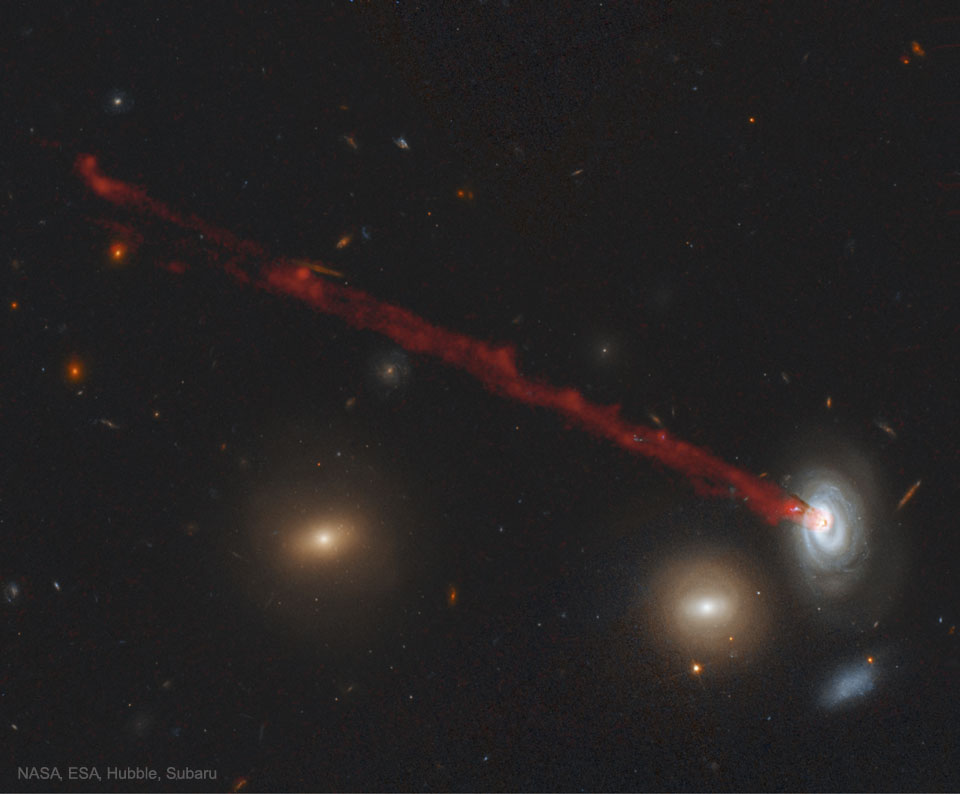
Astronomy picture of the day by NASA - The Long Gas Tail of Spiral Galaxy D100


Why is there long red streak attached to this galaxy? The streak is made mostly of glowing hydrogen that has been systematically stripped away as the galaxy moved through the ambient hot gas in a cluster of galaxies. Specifically, the galaxy is spiral galaxy D100, and cluster is the Coma Cluster of galaxies. The red path connects to the center of D100 because the outer gas, gravitationally held less strongly, has already been stripped away by ram pressure. The extended gas tail is about 200,000 light-years long, contains about 400,000 times the mass of our Sun, and stars are forming within it. Galaxy D99, visible to D100's lower left, appears red because it glows primarily from the light of old red stars -- young blue stars can no longer form because D99 has been stripped of its star-forming gas. The featured false-color picture is a digitally enhanced composite of images from Earth-orbiting Hubble and the ground-based Subaru telescope. Studying remarkable systems like this bolsters our understanding of how galaxies evolve in clusters. via NASA

Снимка на деня за January 28, 2019 от NASA

See more
петък, 25 януари 2019 г.

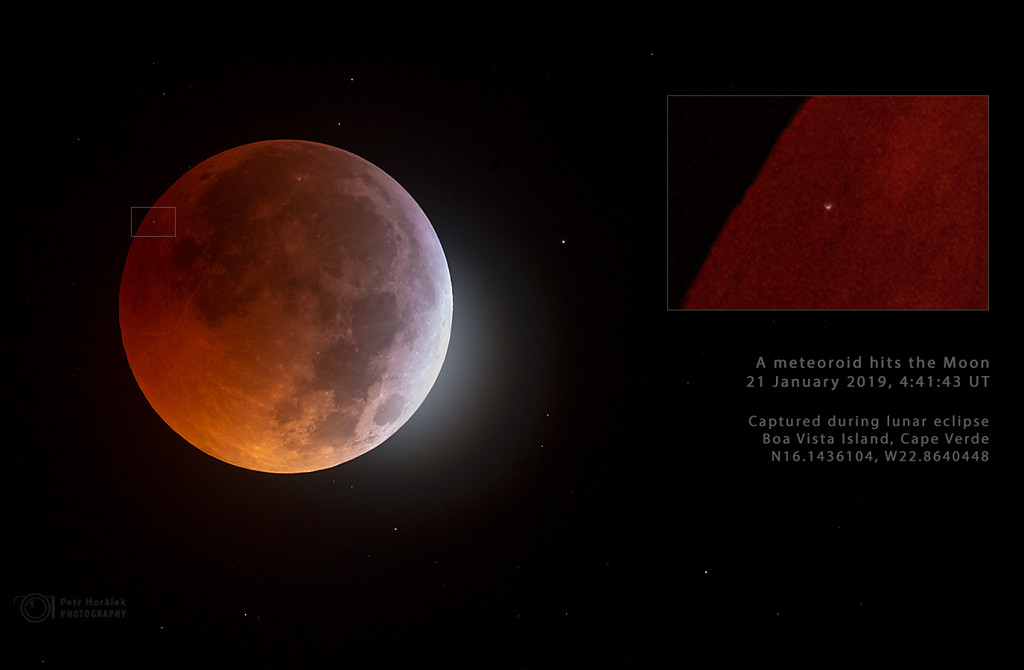
Astronomy picture of the day by NASA - Moon Struck


Craters produced by ancient impacts on the airless Moon have long been a familiar sight. But only since the 1990s have observers began to regularly record and study optical flashes on the lunar surface, likely explosions resulting from impacting meteoroids. Of course, the flashes are difficult to see against a bright, sunlit lunar surface. But during the January 21 total eclipse many imagers serendipitously captured a meteoroid impact flash against the dim red Moon. Found while examining images taken shortly before the total eclipse phase began, the flash is indicated in the inset above, near the Moon's darkened western limb. Estimates based on the flash duration recorded by the Moon Impact Detection and Analysis System (MIDAS) telescopes in southern Spain indicate the impactor's mass was about 10 kilograms and created a crater between seven and ten meters in diameter. via NASA

Снимка на деня за January 25, 2019 от NASA

See more

вторник, 22 януари 2019 г.

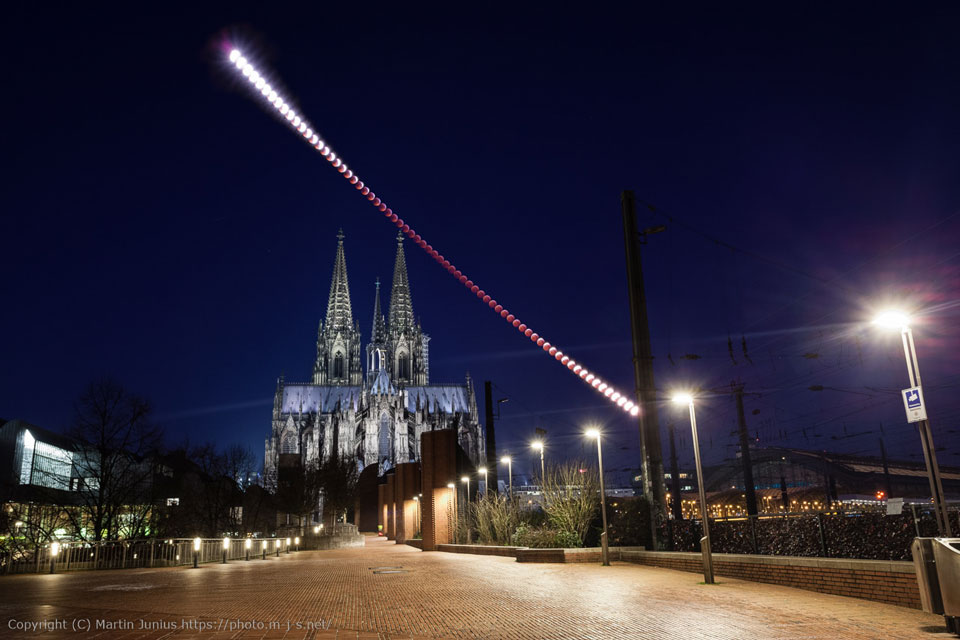
Astronomy picture of the day by NASA - Lunar Eclipse over Cologne Cathedral


Why would a bright full Moon suddenly become dark? Because it entered the shadow of the Earth. That's what happened Sunday night as the Moon underwent a total lunar eclipse. Dubbed by some as a Super (because the Moon was angularly larger than usual, at least slightly) Blood (because the scattering of sunlight through the Earth's atmosphere makes an eclipsed Moon appeared unusually red) Wolf (because January full moons are sometimes called Wolf Moons from the legend that wolves like to howl at the moon) Moon Eclipse, the shadowy spectacle was visible from the half of the Earth then facing the Moon, and was captured in numerous spectacular photographs. Featured, a notable image sequence was captured over the Cologne Cathedral, a UNESCO World Heritage Site, in Cologne, Germany. The lunar eclipse sequence was composed from 68 different exposures captured over three hours during freezing temperatures -- and later digitally combined and edited to remove a cyclist and a pedestrian. The next total lunar eclipse will occur in 2021. via NASA

Снимка на деня за January 22, 2019 от NASA

See more

понеделник, 21 януари 2019 г.

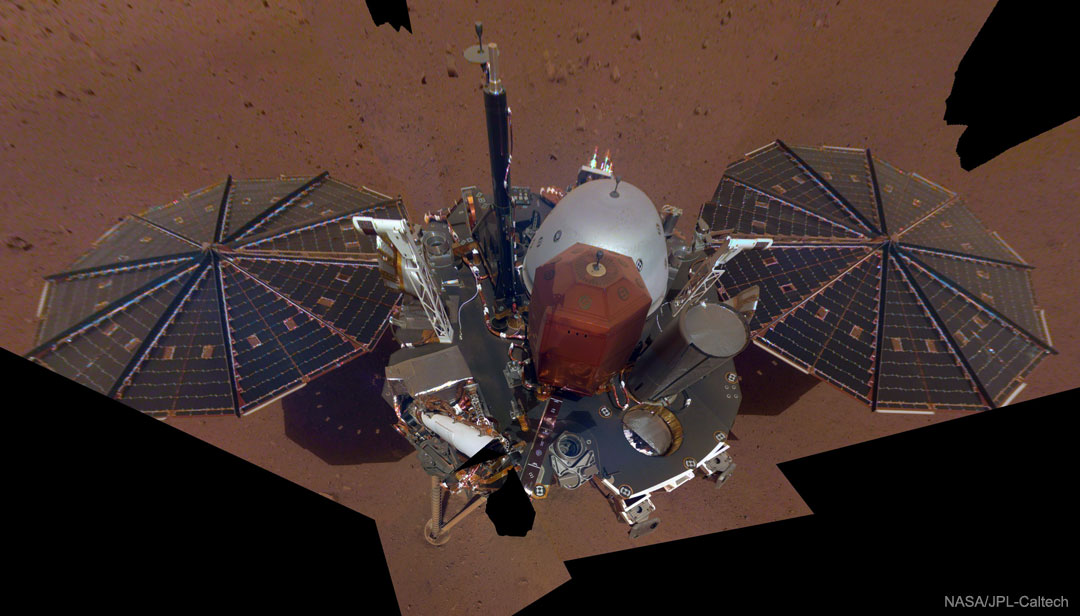
Astronomy picture of the day by NASA - InSight Lander Takes Selfie on Mars


This is what NASA's Insight lander looks like on Mars. With its solar panels, InSight is about the size of a small bus. Insight successfully landed on Mars in November with a main objective to detect seismic activity. The featured selfie is a compilation of several images taken of different parts of the InSight lander, by the lander's arm, at different times. SEIS, the orange-domed seismometer seen near the image center last month, has now been placed on the Martian surface. With this selfie, Mars InSight continues a long tradition of robotic spacecraft on Mars taking and returning images of themselves, including Viking, Sojourner, Pathfinder, Spirit, Opportunity, Phoenix, and Curiosity. Data taken by Mars Insight is expected to give humanity unprecedented data involving the interior of Mars, a region thought to harbor formation clues not only about Mars, but Earth. via NASA

Снимка на деня за January 21, 2019 от NASA

See more

събота, 19 януари 2019 г.

Astronomy picture of the day by NASA - Total Lunar Eclipse at Moonset


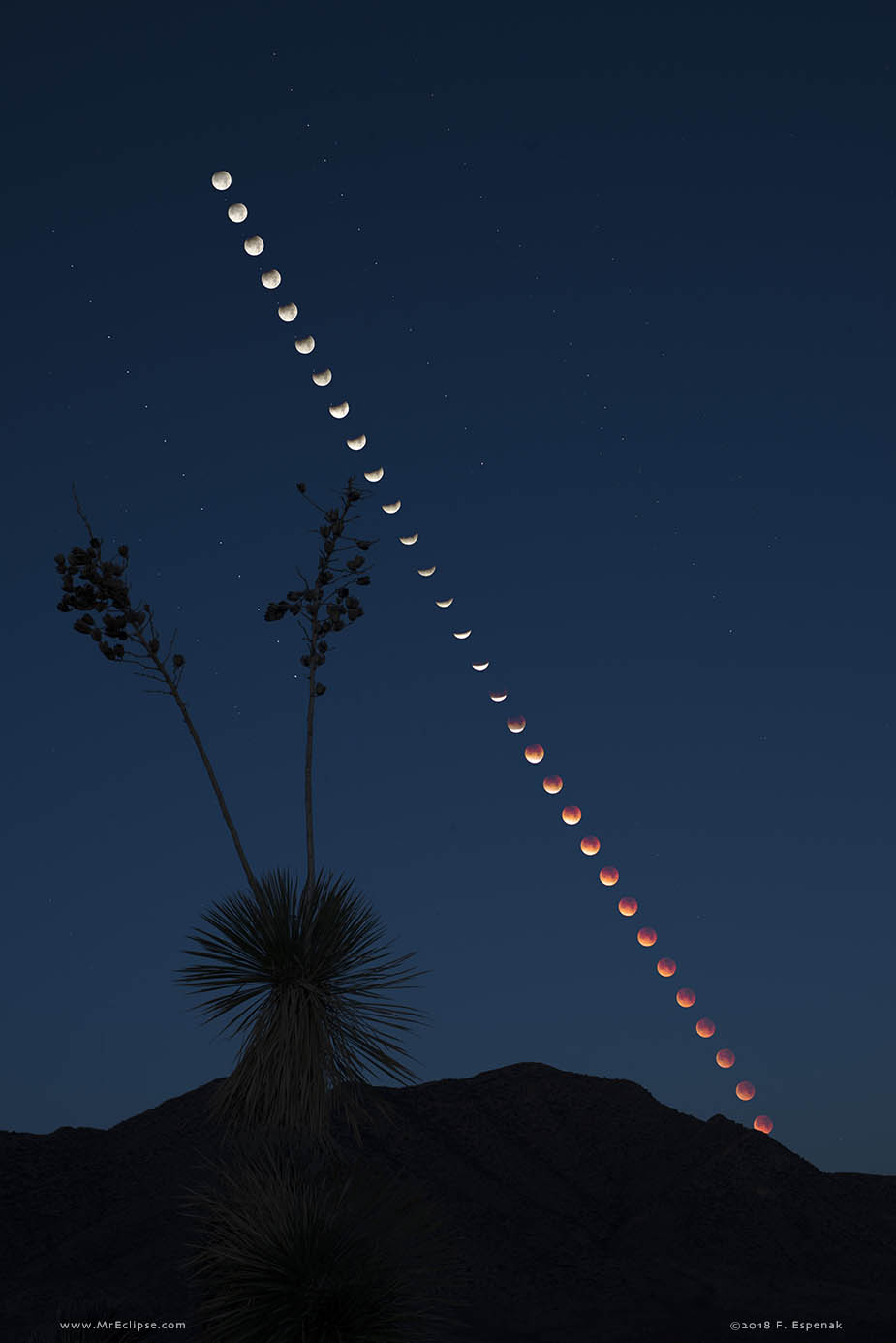
The Moon slid through Earth's shadow on January 31, 2018 in a total lunar eclipse. In this time-lapse sequence of that eclipse from Portal, Arizona, USA, the partial eclipse starts with the Moon high in the western sky. The eclipse total phase lasted about 76 minutes, but totality ended after the dark, reddened Moon set below the horizon. The upcoming total lunar eclipse, on the night of January 20/21, will be better placed for skygazers across the Americas, though. There, all 62 minutes of the total phase, when the Moon is completely immersed in Earth's dark umbral shadow, will take place with the Moon above the horizon. Watch it if you can. The next total lunar eclipse visible from anywhere on planet Earth won't take place until May 26, 2021, and then the total eclipse will last a mere 15 minutes. via NASA

Снимка на деня за January 19, 2019 от NASA

See more

четвъртък, 17 януари 2019 г.

Astronomy picture of the day by NASA - Cabin Under the Stars


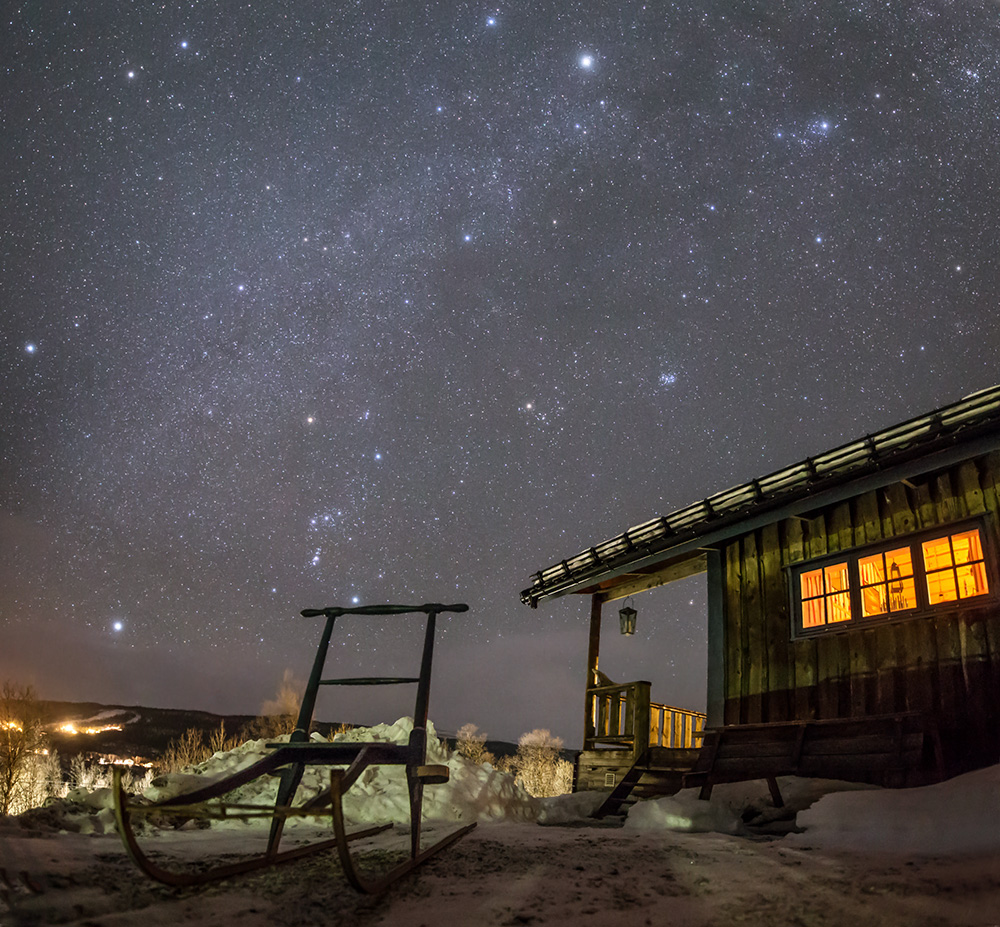
Gocka's, a family nickname for the mountain cabin, and a wooden sled from a generation past stand quietly under the stars. The single exposure image was taken on January 6 from Tanndalen Sweden to evoke a simple visual experience of the dark mountain skies. A pale band of starlight along the Milky Way sweeps through the scene. At the foot of Orion the Hunter, bright star Rigel shines just above the old kicksled's handrail. Capella, alpha star of Auriga the celestial charioteer, is the brightest star at the top of the frame. In fact, the familiar stars of the winter hexagon and the Pleiades star cluster can all be found in this beautiful skyscape from a northern winter night. via NASA

Снимка на деня за January 17, 2019 от NASA

See more

сряда, 16 януари 2019 г.

Astronomy picture of the day by NASA - IC 342: The Hidden Galaxy


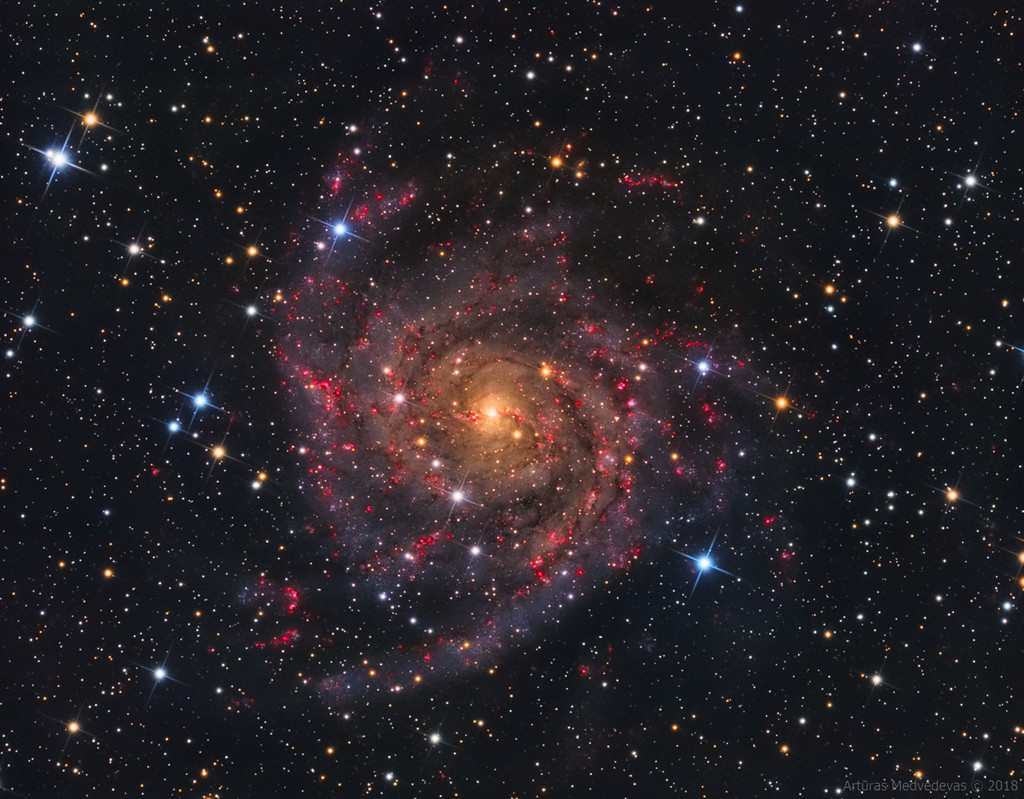
Similar in size to large, bright spiral galaxies in our neighborhood, IC 342 is a mere 10 million light-years distant in the long-necked, northern constellation Camelopardalis. A sprawling island universe, IC 342 would otherwise be a prominent galaxy in our night sky, but it is hidden from clear view and only glimpsed through the veil of stars, gas and dust clouds along the plane of our own Milky Way galaxy. Even though IC 342's light is dimmed and reddened by intervening cosmic clouds, this sharp telescopic image traces the galaxy's own obscuring dust, young star clusters, and glowing pink star forming regions along spiral arms that wind far from the galaxy's core. IC 342 may have undergone a recent burst of star formation activity and is close enough to have gravitationally influenced the evolution of the local group of galaxies and the Milky Way. via NASA

Снимка на деня за January 16, 2019 от NASA

See more

вторник, 15 януари 2019 г.

Astronomy picture of the day by NASA - The Heart and Soul Nebulas


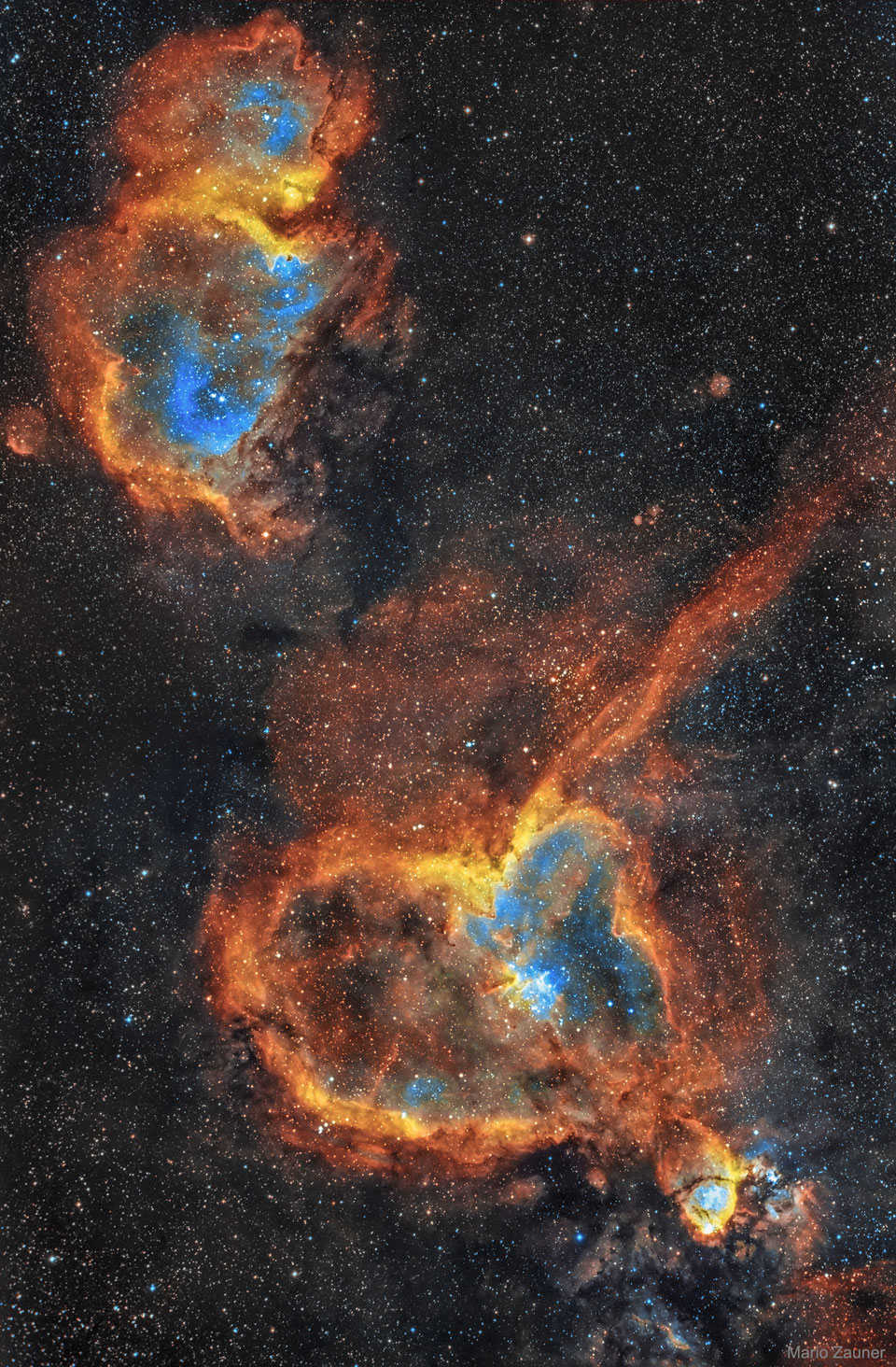
Is the heart and soul of our Galaxy located in Cassiopeia? Possibly not, but that is where two bright emission nebulas nicknamed Heart and Soul can be found. The Heart Nebula, officially dubbed IC 1805 and visible in the featured image on the bottom right, has a shape reminiscent of a classical heart symbol. The Soul Nebula is officially designated IC 1871 and is visible on the upper left. Both nebulas shine brightly in the red light of energized hydrogen. Also shown in this three-color montage is light emitted from sulfur, shown in yellow, and oxygen, shown in blue. Several young open clusters of stars are visible near the nebula centers. Light takes about 6,000 years to reach us from these nebulas, which together span roughly 300 light years. Studies of stars and clusters like those found in the Heart and Soul Nebulas have focused on how massive stars form and how they affect their environment. via NASA

Снимка на деня за January 15, 2019 от NASA

See more

понеделник, 14 януари 2019 г.

Astronomy picture of the day by NASA - Meteor and Milky Way over the Alps


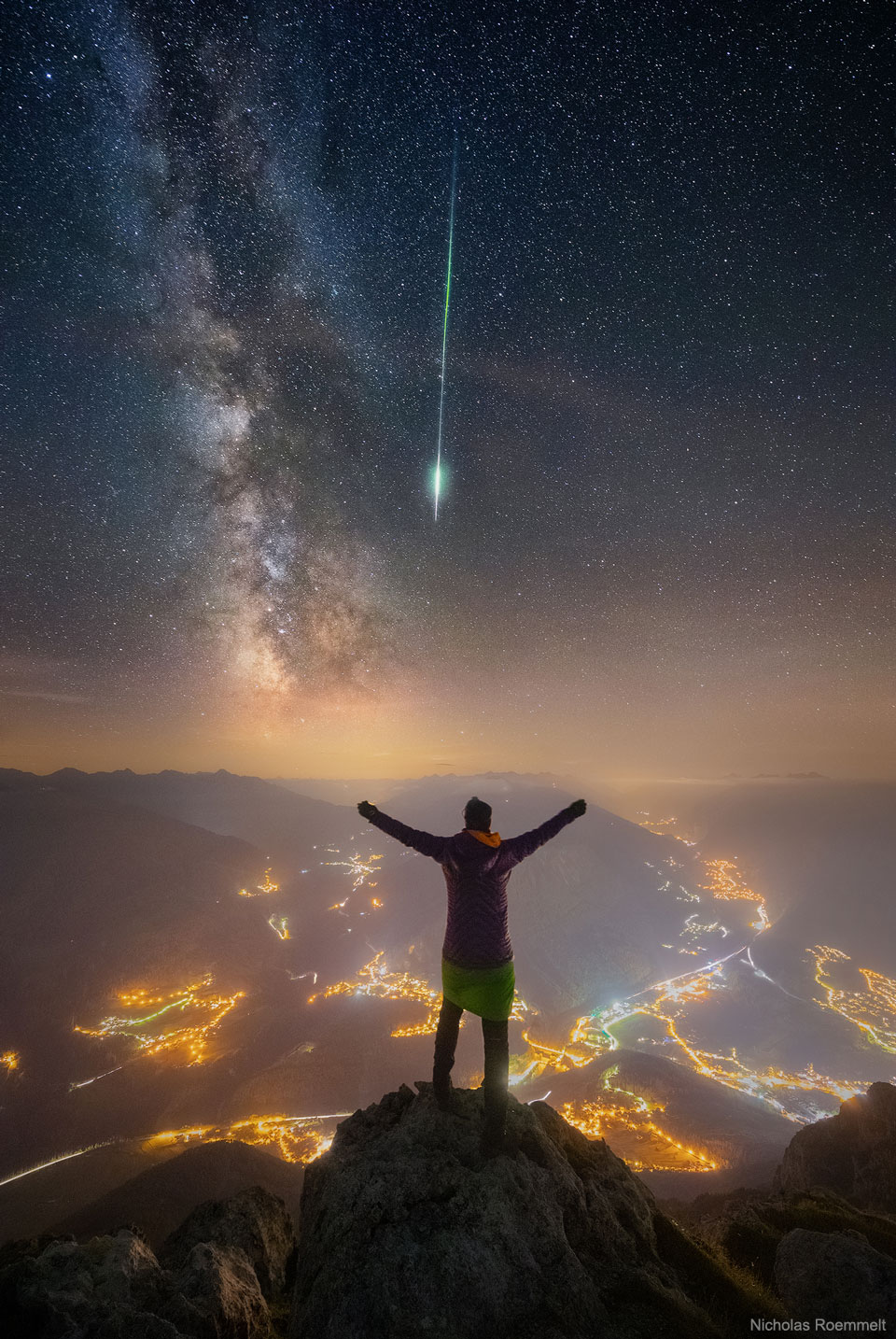
Now this was a view with a thrill. From Mount Tschirgant in the Alps, you can see not only nearby towns and distant Tyrolean peaks, but also, weather permitting, stars, nebulas, and the band of the Milky Way Galaxy. What made the arduous climb worthwhile this night, though, was another peak -- the peak of the 2018 Perseids Meteor Shower. As hoped, dispersing clouds allowed a picturesque sky-gazing session that included many faint meteors, all while a carefully positioned camera took a series of exposures. Suddenly, a thrilling meteor -- bright and colorful -- slashed down right next the nearly vertical band of the Milky Way. As luck would have it, the camera caught it too. Therefore, a new image in the series was quickly taken with one of the sky-gazers posing on the nearby peak. Later, all of the images were digitally combined. via NASA

Снимка на деня за January 14, 2019 от NASA

See more

неделя, 13 януари 2019 г.

Astronomy picture of the day by NASA - Tychos Supernova Remnant in Xray


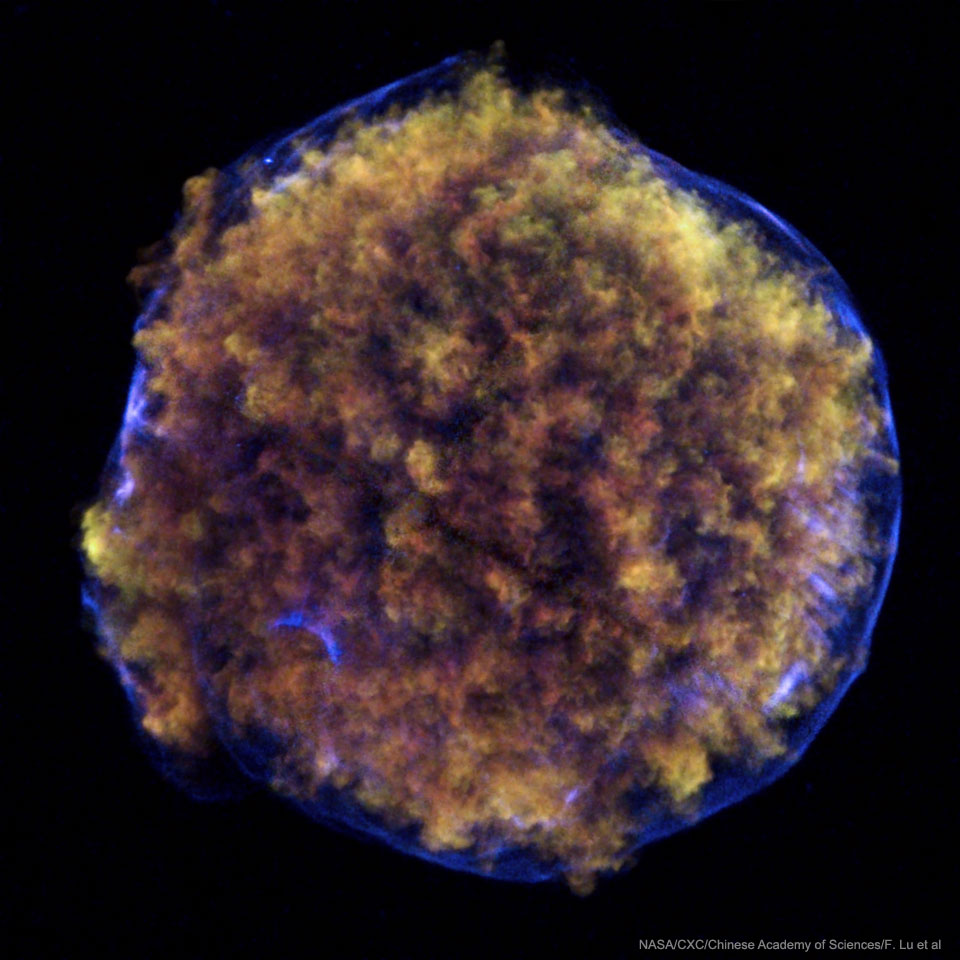
What star created this huge puffball? What's pictured is the hot expanding nebula of Tycho's supernova remnant, the result of a stellar explosion first recorded over 400 years ago by the famous astronomer Tycho Brahe. The featured image is a composite of three X-ray colors taken by the orbiting Chandra X-ray Observatory. The expanding gas cloud is extremely hot, while slightly different expansion speeds have given the cloud a puffy appearance. Although the star that created SN 1572, is likely completely gone, a star dubbed Tycho G, too dim to be discerned here, is thought to be a companion. Finding progenitor remnants of Tycho's supernova is particularly important because the supernova is of Type Ia, an important rung in the distance ladder that calibrates the scale of the visible universe. The peak brightness of Type Ia supernovas is thought to be well understood, making them quite valuable in exploring the relationship between faintness and farness in the distant universe. via NASA

Снимка на деня за January 13, 2019 от NASA

See more