Показват се публикациите с етикет picture of the day. Показване на всички публикации

неделя, 3 февруари 2019 г.

Снимките на Деня


Снимка за този ден February 03, 2019 at 05:30PM
С пожелания за успешен ден!
Снимка на деня от Wildlife Photo
Снимка на деня от The Telegraph
Снимка на деня от The Guardian - 10 снимки
Снимка на деня от National Geographic

Снимка на деня от Дневник

Astronomy picture of the day by NASA - An Airglow Fan from Lake to Sky


Why would the sky look like a giant fan? Airglow. The featured intermittent green glow appeared to rise from a lake through the arch of our Milky Way Galaxy, as captured during 2015 next to Bryce Canyon in Utah, USA. The unusual pattern was created by atmospheric gravity waves, ripples of alternating air pressure that can grow with height as the air thins, in this case about 90 kilometers up. Unlike auroras powered by collisions with energetic charged particles and seen at high latitudes, airglow is due to chemiluminescence, the production of light in a chemical reaction. More typically seen near the horizon, airglow keeps the night sky from ever being completely dark. via NASA

Снимка на деня за February 03, 2019 от NASA

See more

събота, 2 февруари 2019 г.

Снимките на Деня


Снимка за този ден February 02, 2019 at 05:30PM
С пожелания за успешен ден!
Снимка на деня от Wildlife Photo
Снимка на деня от The Telegraph
Снимка на деня от The Guardian - 10 снимки
Снимка на деня от National Geographic

Снимка на деня от Дневник

петък, 1 февруари 2019 г.

NASA Image of the day on February 01, 2019 - Sunrise From Columbia


Описание: On Jan. 22, 2003, the crew of Space Shuttle Columbia captured this sunrise from the crew cabin during Flight Day 7. via NASA

Снимка на деня от NASA за February 01, 2019

See more

Снимките на Деня


Снимка за този ден February 01, 2019 at 05:30PM
С пожелания за успешен ден!
Снимка на деня от Wildlife Photo
Снимка на деня от The Telegraph
Снимка на деня от The Guardian - 10 снимки
Снимка на деня от National Geographic

Снимка на деня от Дневник

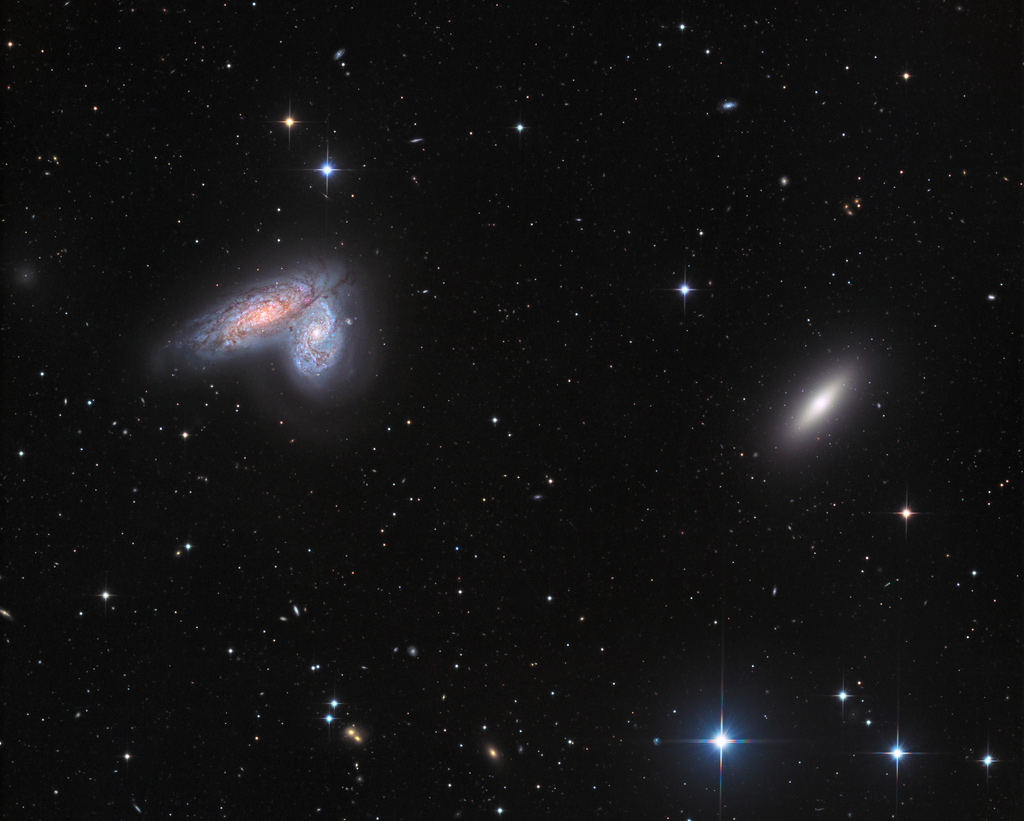
Astronomy picture of the day by NASA - Twin Galaxies in Virgo


Spiral galaxy pair NGC 4567 and NGC 4568 share this sharp cosmic vista with lonely elliptical galaxy NGC 4564. All are members of the large Virgo Galaxy Cluster. With their classic spiral arms, dust lanes, and star clusters, the eye-catching spiral pair is also known as the Butterfly Galaxies or the Siamese Twins. Very close together, the galaxy twins don't seem to be too distorted by gravitational tides. Their giant molecular clouds are known to be colliding though and are likely fueling the formation of massive star clusters. The galaxy twins are about 52 million light-years distant, while their bright cores appear separated by about 20,000 light-years. Of course, the spiky foreground stars lie within our own Milky Way. via NASA

Снимка на деня за February 01, 2019 от NASA

See more

четвъртък, 31 януари 2019 г.

Снимка: Focusing on Lewis Hine’s Photographic Technique


The following is a guest post by Ryan Brubacher, Reference Librarian, Prints & Photographs Division

John Howell, an Indianapolis newsboy ... Photo by Lewis Hine, 1908 Aug. (The shadow of the photographer and his camera are in the foreground.) National Child Labor Committee Collection https://hdl.loc.gov/loc.pnp/nclc.03225

John Howell, an Indianapolis newsboy … Photo by Lewis Hine, 1908 Aug. (The shadow of the photographer and his camera are in the foreground.) National Child Labor Committee Collection https://hdl.loc.gov/loc.pnp/nclc.03225

Lewis Hine, at a certain point in his career, began to refer to himself as an “interpretive photographer” and not a social photographer as he’d been previously termed. While we might imagine him an investigative photo-journalist by today’s standards, his own assessment points to the degree that style and aesthetic decisions played into the images he created – even before he articulated the change. The Library of Congress holds two significant groups of Hine’s photographs, the images made for the National Child Labor Committee (NCLC) and his work for the American National Red Cross (ANRC) during World War I.

What drew me to the work and inspired a blog post was one particular aspect of many of Hine’s photographs, the extremely limited depth of field, or shallow focus. There are some technical reasons that make the use of this technique perhaps more likely, but I wanted to explore how much of the shallow focus was prescribed by circumstance and how much was an aesthetic decision on the part of Hine.

If you are unfamiliar with the concept of depth of field, it refers to the area of a photograph that remains in focus. In photographs with deep depth of field, the entire image appears sharp. With shallow depth of field, as in Hine’s pictures, only a narrow plane appears unblurred. And unlike some photographers making use of this technique to blur out the background, Hine repeatedly uses it in a way that also blurs the foreground. In Hine’s images, he is allowing for a plane of focus sometimes no deeper than a few inches.

In the image below, the grass in the foreground is blurred, and the boys’ game is captured in focus for about 6-10 ft. before falling off again.

Chateau de Grand Val, Sucy-en-Brie. Country home for refugee children from St. Sulpice... Photo by Lewis Hine, 1918 August. American National Red Cross Collection.

Chateau de Grand Val, Sucy-en-Brie. Country home for refugee children from St. Sulpice… Photo by Lewis Hine, 1918 August. American National Red Cross Collection. http://hdl.loc.gov/loc.pnp/anrc.17213

In this photo, we can see that the table edge is fuzzy directly in front of the first girl’s bowl, and immediately behind her, such that her neighbor’s cup is already falling out of focus.

One of the most important occupations in life at La Jonchere. This is one of the colonies established by the Comite Franco-Americain pour la Protection des Enfants de la Frontiere... Photo by Lewis Hine, 1918 27 August. American National Red Cross Collection. http://hdl.loc.gov/loc.pnp/anrc.09027

One of the most important occupations in life at La Jonchere. This is one of the colonies established by the Comite Franco-Americain pour la Protection des Enfants de la Frontiere… Photo by Lewis Hine, 1918 27 August. American National Red Cross Collection. http://hdl.loc.gov/loc.pnp/anrc.09027

Were limitations of the equipment Hine used responsible for the shallow focus in his photos? In the case of Hine, my research revealed he was using large format cameras (most often cited as a Graflex, and most likely to be the Press Graflex, which was produced between 1907-1925) making 4×5 inch and 5×7 inch negatives. The use of larger format negatives, like these, allows greater control over depth of field than what is possible on smaller cameras. Hine also used wide angle lenses and open apertures to capture more light (allowing a faster shutter speed that reduced blur from movement), both of which contributed to shallower depth of field.

Additionally, the Graflex cameras were advertised for the new speed and accuracy by which one could focus and make pictures. A mirrored viewer allowed the photographer to see the exact image that was coming through the lens and allowed a photographer to more quickly make images than the earlier view camera (where the photographer had to focus under a dark cloth). Hine could make last minute adjustments to get the focus he desired moments before the shutter was released. Given the capabilities of his equipment, Hine was apparently making a conscious choice to keep the focus shallow.

Comparing pairs of Hine photographs might help us think about his aesthetic choices with regard to focus:

These two photographs show groups of individuals at about the same distance from the photographer in a work setting. The youngest of his subjects have the sharper focus while the facility and equipment is blurred, yet still purposely in the frame.

Newberry Mills (S.C.) Noon hour. All are working here ... Photo by Lewis Hine, 1908 December. National Child Labor Committee Collection. https://hdl.loc.gov/loc.pnp/nclc.01476

Newberry Mills (S.C.) Noon hour. All are working here … Photo by Lewis Hine, 1908 December. National Child Labor Committee Collection. https://hdl.loc.gov/loc.pnp/nclc.01476

In centre is one of the young boys working underground in the Bliss Shaft of the D.L. & W. at Nanticoke, Pa. Photo by Lewis Hine, 1911 January. National Child Labor Committee Collection. https://hdl.loc.gov/loc.pnp/nclc.01123

In centre is one of the young boys working underground in the Bliss Shaft of the D.L. & W. at Nanticoke, Pa. Photo by Lewis Hine, 1911 January. National Child Labor Committee Collection. https://hdl.loc.gov/loc.pnp/nclc.01123

Both of these boys are shown at half-length, near a work environment, facing toward the photographer and centered. While one is outside and one inside, the depth of field is pretty shallow in both light situations.

Trapper Boy, Turkey Knob Mine, Macdonald, W. Va... Photo by Lewis Hine, 1908 October. National Child Labor Committee Collection. https://hdl.loc.gov/loc.pnp/nclc.01070

Trapper Boy, Turkey Knob Mine, Macdonald, W. Va… Photo by Lewis Hine, 1908 October. National Child Labor Committee Collection. https://hdl.loc.gov/loc.pnp/nclc.01070

Young Driver in Mine: Had been driving one year. (7 A.M. to 5:30 P.M. Daily) Brown Mine, Brown, W. Va. Photo by Lewis Hine, 1908 September. National Child Labor Committee Collection. https://hdl.loc.gov/loc.pnp/nclc.0105

Young Driver in Mine: Had been driving one year. (7 A.M. to 5:30 P.M. Daily) Brown Mine, Brown, W. Va. Photo by Lewis Hine, 1908 September. National Child Labor Committee Collection. https://hdl.loc.gov/loc.pnp/nclc.01059

These photos show little girls of a fairly young age engaged in very different activities. The depth of field is extremely shallow in both pictures, though in the Child Labor example Hine appears to have missed his mark, as the ground directly in front of his subject is in focus, but she is not.

Renee Grouyer, "the adopted daughter" of the Intelligence Section of the Army Field Clerks, 2nd Section, GHQ, cant's play ball very well... Photo by Lewis Hine, 1918 August. American National Red Cross Collection. http://hdl.loc.gov/loc.pnp/anrc.17112

Renee Grouyer, “the adopted daughter” of the Intelligence Section of the Army Field Clerks, 2nd Section, GHQ, [can’t] play ball very well… Photo by Lewis Hine, 1918 August. American National Red Cross Collection. https://hdl.loc.gov/loc.pnp/anrc.17112

Little girl, apparently 6 yrs. old - but didn't know her name or age - tending stand at Washington and 3rd St. for older sister...Hoboken, New Jersey. Photo by Lewis Hine, 1912 December. National Child Labor Committee Collection. https://hdl.loc.gov/loc.pnp/nclc.03824

Little girl, apparently 6 yrs. old – but didn’t know her name or age – tending stand at Washington and 3rd St. for older sister…Hoboken, New Jersey. Photo by Lewis Hine, 1912 December. National Child Labor Committee Collection. https://hdl.loc.gov/loc.pnp/nclc.03824

This comparison shows children in the same occupation as taken by Hine and Jacob Riis. In this Riis photo the bathroom and the newsboys are basically in focus and they are dispersed doing their washing up. In the Hine image, the newsboys are in a crowd with the foreground newsies out of focus and the center of the madness (boy crouched on the floor) very crisp.

"Washing up" in the newsboys' lodging house. Photo by Jacob Riis, ca. 1890. http://hdl.loc.gov/loc.pnp/cph.3a18571

“Washing up” in the newsboys’ lodging house. Copy of photo by Jacob Riis, ca. 1890. https://hdl.loc.gov/loc.pnp/cph.3a18571 (View original photograph at Museum of the City of New York)

Amusing themselves while waiting for morning papers...New York, NY. Photo by Lewis Hine, 1908 February. National Child Labor Committee Collection. https://hdl.loc.gov/loc.pnp/nclc.03181

Amusing themselves while waiting for morning papers…New York, NY. Photo by Lewis Hine, 1908 February. National Child Labor Committee Collection. https://hdl.loc.gov/loc.pnp/nclc.03181

Below is a pair of portraits of younger girls. Situating them side by side allows us to compare the manipulation of focus by Hine with that of his contemporary Alfred Stieglitz. In the Stieglitz photo the girl, in soft focus, is surrounded by nature with tree branches and plant stems behind her and in front of her. She does not acknowledge the photographer and there is no obvious plane of focus. In the Hine image, the girls are shown in sharp focus looking directly toward the photographer, while the world around is blurry.

Spring. Photo by Alfred Stieglitz, published in Camera Notes, 1902 Jan. http://hdl.loc.gov/loc.pnp/cph.3b46416

Spring. Photo by Alfred Stieglitz, published in Camera Notes, 1902 Jan. http://hdl.loc.gov/loc.pnp/cph.3b46416

Maud Daly, five years old. Grade Daly, three years old. ... Bay St. Louis, Mississippi. Photo by Lewis Hine, 1911 March. National Child Labor Committee Collection. https://hdl.loc.gov/loc.pnp/nclc.00907

Maud Daly, five years old. Grade Daly, three years old. … Bay St. Louis, Mississippi. Photo by Lewis Hine, 1911 March. National Child Labor Committee Collection. https://hdl.loc.gov/loc.pnp/nclc.00907

So what do we make of Hine’s aesthetic decisions? Why did he choose to emphasize selective focus? Does he use it differently in the two bodies of work, NCLC and ANRC? Is it photographing children that seems to provoke him to narrow his depth of field?  From biographical accounts of his life alongside the notes and captions for his photos, I tend to think it was a strong and passionate desire to humanize his subjects – to make them appear as real as they would if one was really standing there. Perhaps also he liked the idea that a “slice of a life” is brought into focus, extracting individuals with little financial import from obscurity, and bringing clarity to a messy world of industrialization and war.

Hine’s use of shallow depth of field makes his photos more compositionally interesting, but also introduces a confusion for the viewer. The photos seem to provide objective facts by virtue of their crispness, but we are constantly made aware of things falling out of that precise focus. They play on this line between documentary “honesty” and artful composition. I don’t want to call them haunting since some of them have such smiling, lively subjects, but these photos develop a sublime quality the longer you look at them. They lift their subjects up as worthy of attention. Hine’s photos exhibit a beauty despite the ominous undertones of images depicting the realities of war and the conditions endured by young workers.

Learn More:


Autor: Barbara Orbach Natanson
Published on January 31, 2019 at 07:09PM

NASA Image of the day on January 31, 2019 - Hubble Accidentally Discovers a New Galaxy


Описание: Despite the vastness of space, objects tend to get in front of each other. via NASA

Снимка на деня от NASA за January 31, 2019

See more

Снимките на Деня


Снимка за този ден January 31, 2019 at 05:30PM
С пожелания за успешен ден!
Снимка на деня от Wildlife Photo
Снимка на деня от The Telegraph
Снимка на деня от The Guardian - 10 снимки
Снимка на деня от National Geographic

Снимка на деня от Дневник

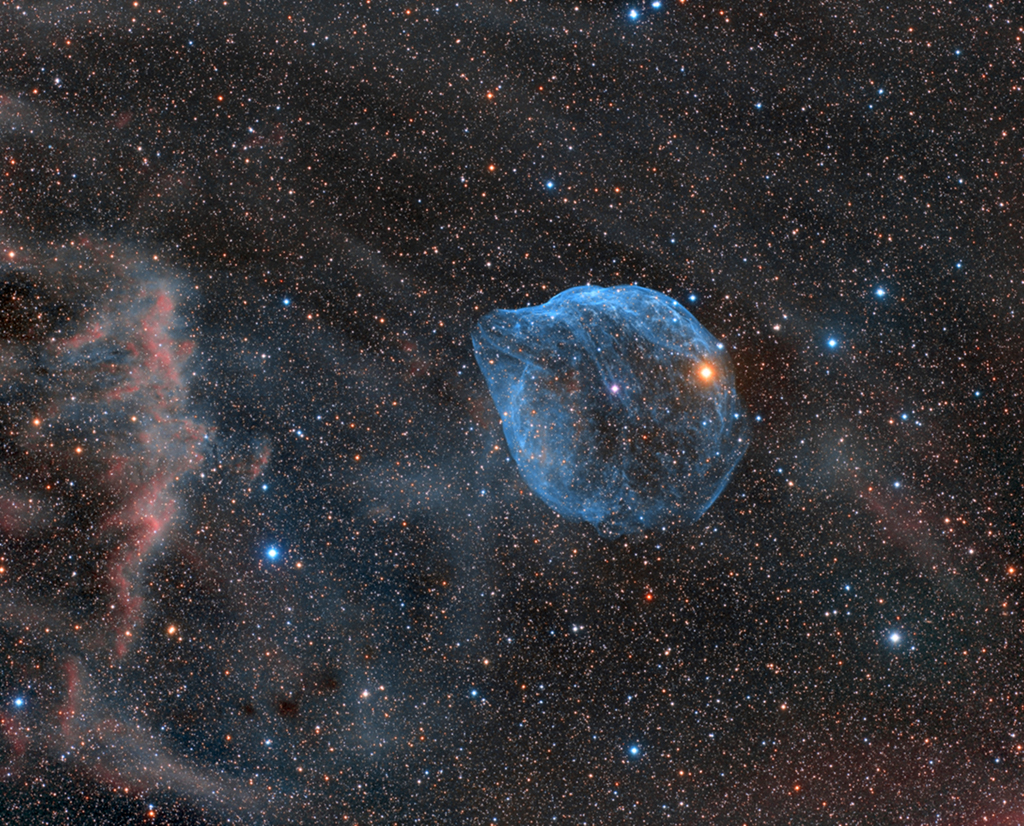
Astronomy picture of the day by NASA - Sharpless 308: Star Bubble


Blown by fast winds from a hot, massive star, this cosmic bubble is huge. Cataloged as Sharpless 2-308 it lies some 5,200 light-years away toward the constellation of the Big Dog (Canis Major) and covers slightly more of the sky than a Full Moon. That corresponds to a diameter of 60 light-years at its estimated distance. The massive star that created the bubble, a Wolf-Rayet star, is the bright one near the center of the nebula. Wolf-Rayet stars have over 20 times the mass of the Sun and are thought to be in a brief, pre-supernova phase of massive star evolution. Fast winds from this Wolf-Rayet star create the bubble-shaped nebula as they sweep up slower moving material from an earlier phase of evolution. The windblown nebula has an age of about 70,000 years. Relatively faint emission captured in the expansive image is dominated by the glow of ionized oxygen atoms mapped to a blue hue. SH2-308 is also known as The Dolphin Nebula. via NASA

Снимка на деня за January 31, 2019 от NASA

See more

сряда, 30 януари 2019 г.

NASA Image of the day on January 30, 2019 - Sailing Over the Caribbean From the International Space Station


Описание: Portions of Cuba, the Bahamas and the Turks and Caicos Islands are viewed from the International Space Station. via NASA

Снимка на деня от NASA за January 30, 2019

See more

Снимките на Деня


Снимка за този ден January 30, 2019 at 05:30PM
С пожелания за успешен ден!
Снимка на деня от Wildlife Photo
Снимка на деня от The Telegraph
Снимка на деня от The Guardian - 10 снимки
Снимка на деня от National Geographic

Снимка на деня от Дневник

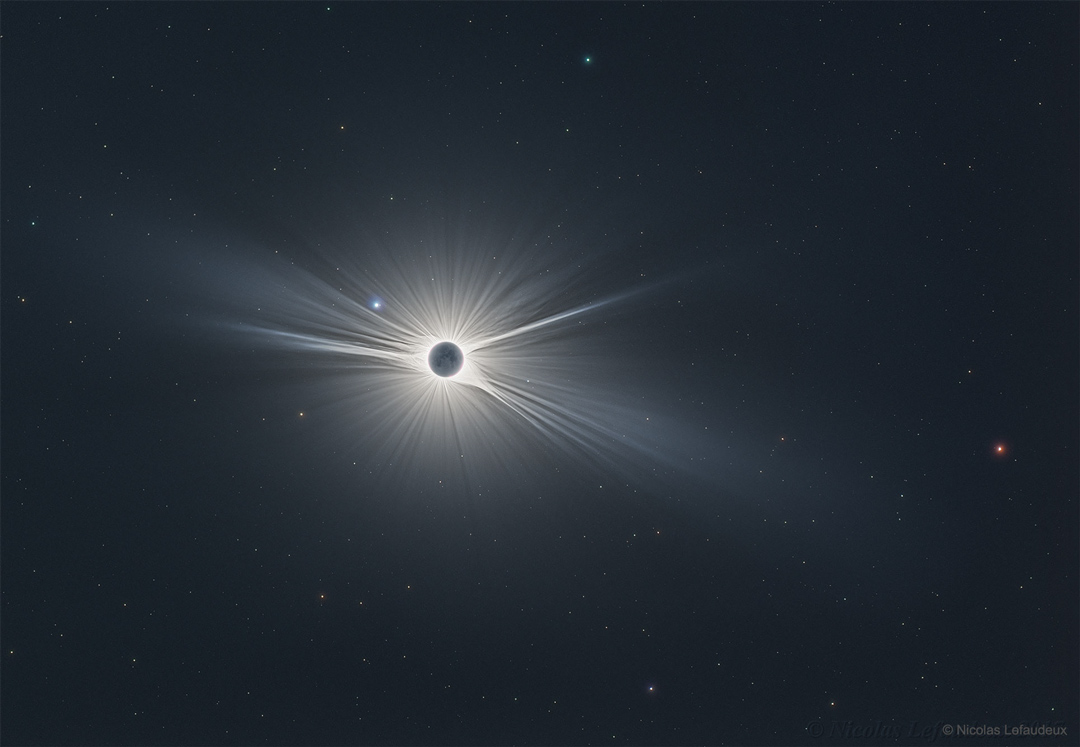
Astronomy picture of the day by NASA - Wide Field View of Great American Eclipse


Only in the fleeting darkness of a total solar eclipse is the light of the solar corona easily visible. Normally overwhelmed by the bright solar disk, the expansive corona, the sun's outer atmosphere, is an alluring sight. But the subtle details and extreme ranges in the corona's brightness, although discernible to the eye, are notoriously difficult to photograph. Pictured here, however, using over 120 images and meticulous digital processing, is a detailed wide-angle image of the Sun's corona taken during the Great American Eclipse in 2017 August. Clearly visible are intricate layers and glowing caustics of an ever changing mixture of hot gas and magnetic fields. Hundreds of stars as faint as 11th magnitude are visible behind the Moon and Sun, with Mars appearing in red on the far right. The next total eclipse of the Sun will occur on July 2 and be visible during sunset from a thin swath across Chile and Argentina. via NASA

Снимка на деня за January 30, 2019 от NASA

See more

вторник, 29 януари 2019 г.

NASA Image of the day on January 29, 2019 - Falcon 9, Crew Dragon Roll to Launch Pad


Описание: Falcon 9, Crew Dragon Roll to Launch Pad via NASA

Снимка на деня от NASA за January 29, 2019

See more

Снимките на Деня


Снимка за този ден January 29, 2019 at 05:30PM
С пожелания за успешен ден!
Снимка на деня от Wildlife Photo
Снимка на деня от The Telegraph
Снимка на деня от The Guardian - 10 снимки
Снимка на деня от National Geographic

Снимка на деня от Дневник

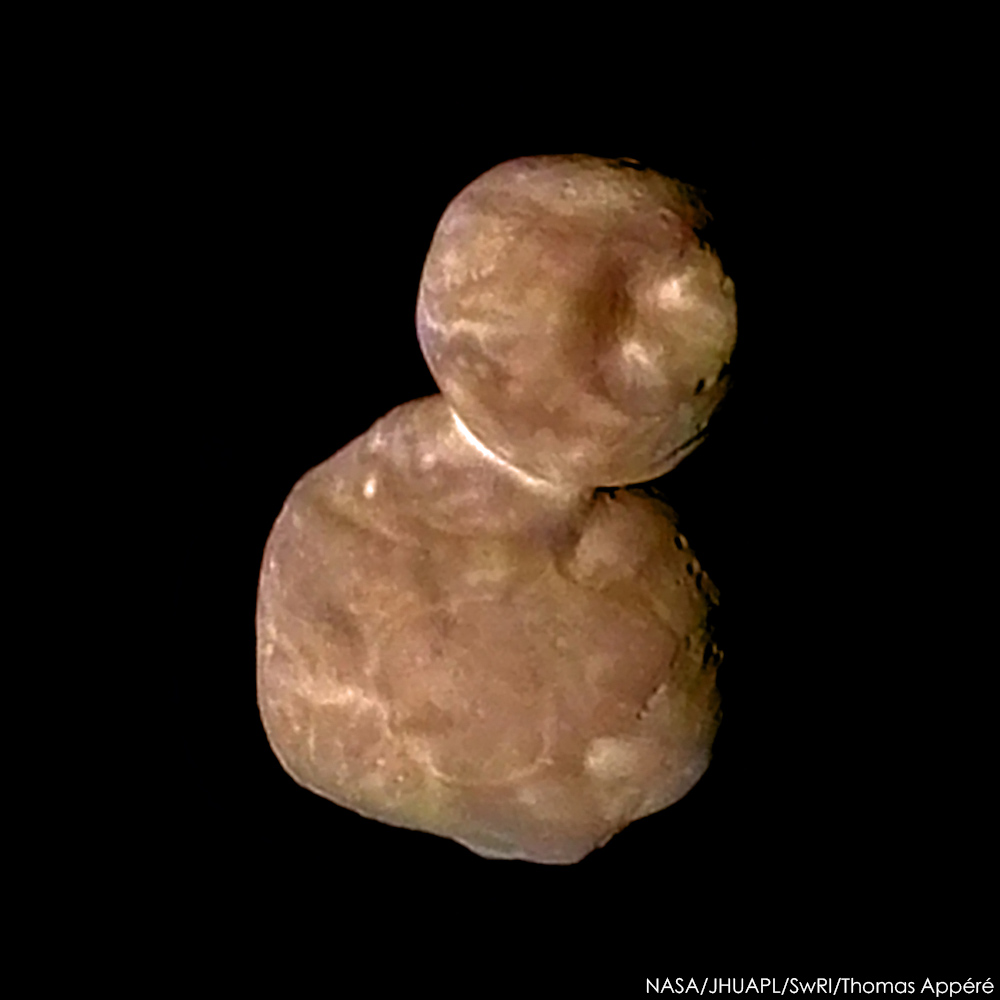
Astronomy picture of the day by NASA - Ultima Thule from New Horizons


How do distant asteroids differ from those near the Sun? To help find out, NASA sent the robotic New Horizons spacecraft past the classical Kuiper belt object 2014 MU69, nicknamed Ultima Thule, the farthest asteroid yet visited by a human spacecraft. Zooming past the 30-km long space rock on January 1, the featured image is the highest resolution picture of Ultima Thule's surface beamed back so far. Utima Thuli does look different than imaged asteroids of the inner Solar System, as it shows unusual surface texture, relatively few obvious craters, and nearly spherical lobes. Its shape is hypothesized to have formed from the coalescence of early Solar System rubble in into two objects -- Ultima and Thule -- which then spiraled together and stuck. Research will continue into understanding the origin of different surface regions on Ultima Thule, whether it has a thin atmosphere, how it obtained its red color, and what this new knowledge of the ancient Solar System tells us about the formation of our Earth. via NASA

Снимка на деня за January 29, 2019 от NASA

See more

понеделник, 28 януари 2019 г.

NASA Image of the day on January 28, 2019 - Remembering Space Shuttle Challenger


Описание: NASA lost seven of its own on the morning of Jan. 28, 1986, when a booster engine failed, causing the Shuttle Challenger to break apart just 73 seconds after launch. In this photo from Jan. 9, 1986, the Challenger crew takes a break during countdown training at NASA's Kennedy Space Center. via NASA

Снимка на деня от NASA за January 28, 2019

See more

Снимките на Деня


Снимка за този ден January 28, 2019 at 05:30PM
С пожелания за успешен ден!
Снимка на деня от Wildlife Photo
Снимка на деня от The Telegraph
Снимка на деня от The Guardian - 10 снимки
Снимка на деня от National Geographic

Снимка на деня от Дневник

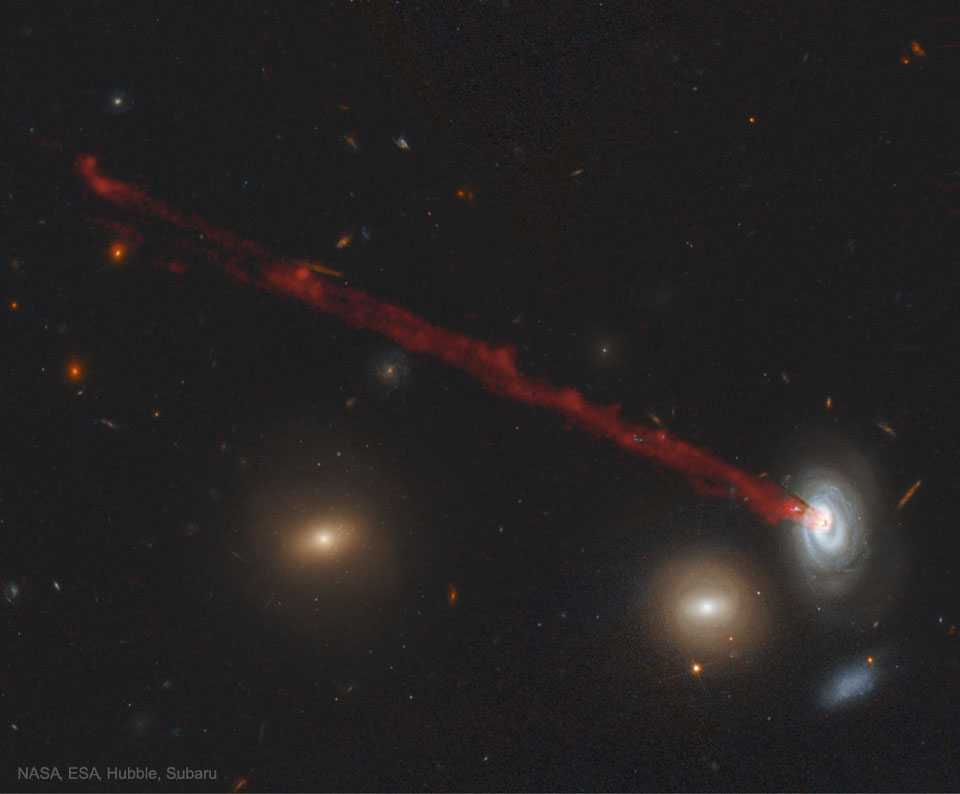
Astronomy picture of the day by NASA - The Long Gas Tail of Spiral Galaxy D100


Why is there long red streak attached to this galaxy? The streak is made mostly of glowing hydrogen that has been systematically stripped away as the galaxy moved through the ambient hot gas in a cluster of galaxies. Specifically, the galaxy is spiral galaxy D100, and cluster is the Coma Cluster of galaxies. The red path connects to the center of D100 because the outer gas, gravitationally held less strongly, has already been stripped away by ram pressure. The extended gas tail is about 200,000 light-years long, contains about 400,000 times the mass of our Sun, and stars are forming within it. Galaxy D99, visible to D100's lower left, appears red because it glows primarily from the light of old red stars -- young blue stars can no longer form because D99 has been stripped of its star-forming gas. The featured false-color picture is a digitally enhanced composite of images from Earth-orbiting Hubble and the ground-based Subaru telescope. Studying remarkable systems like this bolsters our understanding of how galaxies evolve in clusters. via NASA

Снимка на деня за January 28, 2019 от NASA

See more

неделя, 27 януари 2019 г.

Снимките на Деня


Снимка за този ден January 27, 2019 at 05:30PM
С пожелания за успешен ден!
Снимка на деня от Wildlife Photo
Снимка на деня от The Telegraph
Снимка на деня от The Guardian - 10 снимки
Снимка на деня от National Geographic

Снимка на деня от Дневник